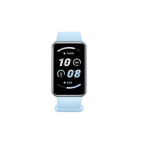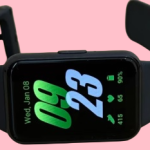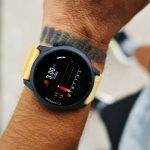

In the modern health and wellness landscape, achieving consistency in your workouts can often feel like an uphill battle. Whether you are aiming to lose weight, increase muscle mass, train for a marathon, or simply establish a healthier lifestyle, tracking your progress manually is tedious and often inaccurate. For years, fitness enthusiasts relied on guesswork, manual logbooks, and basic stopwatches to monitor their physical activity. However, the rise of advanced wearable technology has fundamentally transformed how we approach personal health.
According to global fitness industry reports, wearable technology—including smartwatches and dedicated fitness trackers—consistently ranks at the absolute top of modern health trends. This shift from passive accessories to active health partners means that a modern smartwatch is no longer just a digital clock; it is a clinical-grade data harvester and a personal coach wrapped around your wrist.
If you are looking to take control of your well-being, upgrading your fitness gear with a dedicated smartwatch can act as the ultimate catalyst. Below, we break down five definitive, science-backed ways a smartwatch can completely revolutionize your fitness routine, optimize your daily health metrics, and keep you deeply committed to your long-term goals.
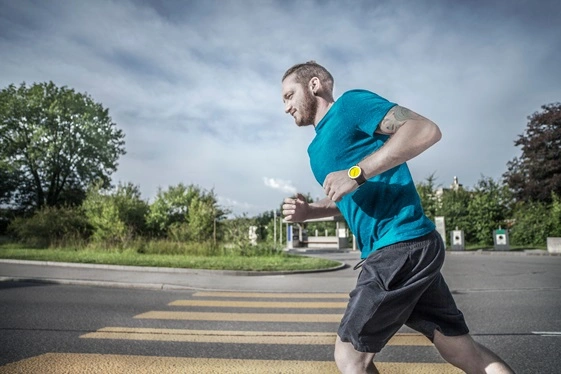
1. Precision Heart Rate Zone Training
One of the most powerful features of a premium fitness smartwatch is its ability to perform real-time physiological tracking via advanced optical heart rate sensors. Most casual gym-goers measure their workouts by how tired they feel or how much they sweat. While these subjective feelings are indicators of effort, they do not provide the objective scientific data needed to maximize efficiency.
Your cardiovascular system responds to physical stress in predictable patterns, which are categorized into five distinct heart rate zones based on your maximum heart rate (MHR):
- Zone 1 (Healthy Heart/Warm-Up): 50% to 60% of MHR. Ideal for active recovery and low-intensity endurance building.
- Zone 2 (Fat Burn/Fitness): 60% to 70% of MHR. This is the sweet spot where your body primarily uses stored fats for fuel, making it perfect for weight management and building long-term aerobic capacity.
- Zone 3 (Aerobic/Endurance): 70% to 80% of MHR. Improves cardiovascular strength, lung capacity, and overall physical endurance.
- Zone 4 (Anaerobic/Performance): 80% to 90% of MHR. Enhances your body’s lactate threshold, improving high-speed performance and short bursts of power.
- Zone 5 (Red Line/Maximum Effort): 90% to 100% of MHR. Used strictly for peak interval training, pushing your neuromuscular system to its limits.
Without a smartwatch, it is nearly impossible to tell which zone you are executing your workout in. By glancing at your wrist during a high-intensity interval training (HIIT) session, a running circuit, or a weightlifting block, you receive immediate feedback. If your goal is fat loss, your watch can alert you when your heart rate climbs out of Zone 2 and into Zone 3, allowing you to modulate your pace to keep your body in the optimal fat-burning state. Conversely, if you are performing speed intervals, the watch ensures you are pushing deeply into Zone 4 or 5 to truly trigger cardiovascular adaptation. This precision prevents overtraining, minimizes injury risks, and ensures that every minute you spend exercising yields the highest possible return on your investment.
2. Unlocking Hyper-Personalized Recovery Insights
For decades, the fitness world focused almost exclusively on the training itself. The common mantra was “no pain, no gain,” prompting individuals to push through extreme soreness, exhaustion, and fatigue. However, modern exercise science has proven that physical adaptations—muscle growth, fat burning, and cardiovascular improvement—do not actually happen while you are lifting weights or running. They happen during recovery.
When you subject your body to intense exercise, you create micro-tears in your muscle fibers and temporarily strain your nervous system. If you do not allow your body sufficient time to rebuild these tissues, you risk hitting a training plateau, experiencing chronic burnout, or suffering debilitating injuries. This is where the advanced biosensors of a modern smartwatch revolutionize your routine.
By continuously monitoring metrics such as Heart Rate Variability (HRV), resting heart rate, and skin temperature variations throughout the night, your smartwatch builds a comprehensive profile of your autonomic nervous system. HRV represents the tiny variations in time between consecutive heartbeats. A high HRV indicates that your body is highly resilient, well-rested, and ready to handle physical stress. A low HRV indicates that your sympathetic nervous system (your fight-or-flight response) is dominant, meaning your body is still struggling to recover from previous workouts, poor sleep, or mental stress.
When you wake up, your smartwatch processes these metrics to give you a personalized “Readiness Score” or “Recovery Score.” If your score is exceptionally low, your device will proactively recommend a low-intensity active recovery walk or a gentle yoga session rather than a grueling heavy lifting routine. By tailoring your workouts to your body’s actual internal state rather than a rigid calendar schedule, you cultivate a smarter, hyper-personalized training plan that yields consistent, sustainable results over months and years.
3. Automated Activity Recognition and Granular Data Logging
One of the primary friction points that causes people to abandon new fitness habits is the administrative hassle of logging workouts. Manually tracking your running distances, inputting weight plates into a smartphone app, or calculating active calorie burn takes time and breaks the mental flow of your exercise routine.
Modern smartwatches solve this problem entirely by leveraging highly accurate tri-axial accelerometers, gyroscopes, and integrated GPS systems. These built-in technologies allow the device to automatically recognize the specific type of movement you are performing. Whether you transition from a outdoor run to an indoor rowing machine, or from a high-speed cycling circuit to a swimming pool, the smartwatch detects the change in your motion vectors and logs the corresponding metrics automatically.
For runners, outdoor cyclists, and hikers, the built-in GPS maps out your exact routes, elevations, pace charts, and splits without needing to keep your smartphone held awkwardly in your hand or strapped to your arm. For strength training enthusiasts, advanced models can even count your repetitions and identify the muscle groups targeted based on the movement patterns of your wrist.
When your workout is complete, this granular data is instantly synced to your companion smartphone application. You receive visual breakdowns of your average pace, peak power outputs, aerobic training effect, and total active metabolic rate. Having immediate access to these objective, historical data logs allows you to accurately measure the concept of progressive overload—the gradual increase of stress placed upon the body during exercise training. Watching your running times drop week-over-week or seeing your resting heart rate steadily decline provides undeniable, visual proof of your progress, creating a powerful psychological feedback loop that supercharges your long-term motivation.
4. Gamification, Behavioral Triggers, and Daily Accountability
The greatest challenge in any fitness journey is not understanding what to do; it is maintaining the discipline to do it consistently. Studies published in major medical journals highlight that activity trackers significantly increase physical activity levels, adding an average of over 1,200 to 1,800 steps to an individual’s daily output. The mechanics behind this massive behavioral shift lie in the concepts of gamification and proactive behavioral triggers built into the smartwatch operating system.
Human psychology responds incredibly well to visual rewards and structured goal-setting. Smartwatches capitalize on this by transforming daily movement into an interactive game. Features like closing daily activity rings, hitting streak milestones, and earning digital badges trigger dopamine releases in the brain similar to completing levels in a video game. These visual anchors make the abstract concept of “staying healthy” tangible and immediately rewarding.
Furthermore, a smartwatch acts as a persistent accountability partner that cuts through the distractions of a sedentary workday. If you spend hours sitting at a desk typing on a laptop, your metabolism slows, and your muscles stiffen. Smartwatches monitor periods of physical inactivity and deliver gentle, haptic vibration alerts to your wrist, reminding you to stand up, stretch, or take a quick 250-step walk to get your circulation flowing.
Many devices also include dedicated hydration logs and structured deep-breathing reminders. When your wrist vibrates to remind you to drink water or take a two-minute mindful breathing break to lower cortisol levels, it systematically breaks down the bad habits of modern sedentary environments. Over time, these micro-habits compound, drastically increasing your non-exercise activity thermogenesis (NEAT)—the energy expended for everything we do that is not sleeping, eating, or sports-like exercise—which plays a massive role in weight management and general metabolic health.
5. Maximizing Sleep Quality to Protect Your Gains
It is an undeniable law of biology: if you are not sleeping properly, you are severely compromising your fitness results. Chronic sleep deprivation sabotages your health goals from multiple angles. It reduces your human growth hormone (HGH) production, which is crucial for cellular repair and muscle development. It increases your ghrelin levels (the hunger hormone) while suppressing leptin (the fullness hormone), leading to intense cravings for high-calorie, processed carbohydrates. Additionally, poor sleep destroys your mental focus, making you far more likely to skip your scheduled workouts entirely.
A fitness smartwatch completely revolutionizes your sleep hygiene by transforming your bedtime into a data-driven optimization window. By analyzing your heart rate, movement patterns, and blood oxygen saturation (SpO2) levels throughout the night, the device separates your sleep architecture into its vital stages:
- Light Sleep: Promotes mental restoration, memory consolidation, and early physiological recovery.
- Deep Sleep (Slow-Wave Sleep): The critical stage for physical recovery. Blood flow shifts heavily toward your muscle tissues, triggering tissue repair, muscle growth, and immune system rejuvenation.
- REM Sleep (Rapid Eye Movement): The stage responsible for cognitive processing, learning stabilization, and structural brain health.
When you view your comprehensive sleep score in the morning, you gain clear visibility into the quality of your rest, not just the duration. You might spend eight hours lying in bed, but if your smartwatch reveals that your deep sleep was drastically clipped due to late-night caffeine consumption, alcohol intake, or sleeping in an overly warm room, you can make targeted adjustments to your environment. By tweaking your evening routines and watching how your sleep scores improve, you ensure that your body is functioning as a hyper-efficient recovery machine, fully preparing you to attack your fitness routines with maximum intensity the next day.
Conclusion: Transform Passive Habits into Active Mastery
Embracing a fitness routine requires more than just willpower; it requires strategic, actionable data. A high-quality smartwatch bridges the gap between how you think your body is performing and how it is actually performing. By providing precise heart rate tracking, deep recovery analytics, seamless activity logging, psychological behavioral triggers, and advanced sleep insights, a wearable device removes the guesswork and vulnerabilities from your health journey.
Investing in your wearable tech setup means you are taking proactive, data-driven control of your future self. By learning to interpret these metrics and pairing your smart device with comfortable, high-performance gear, you build a sustainable foundation for lifelong health, performance, and athletic mastery.